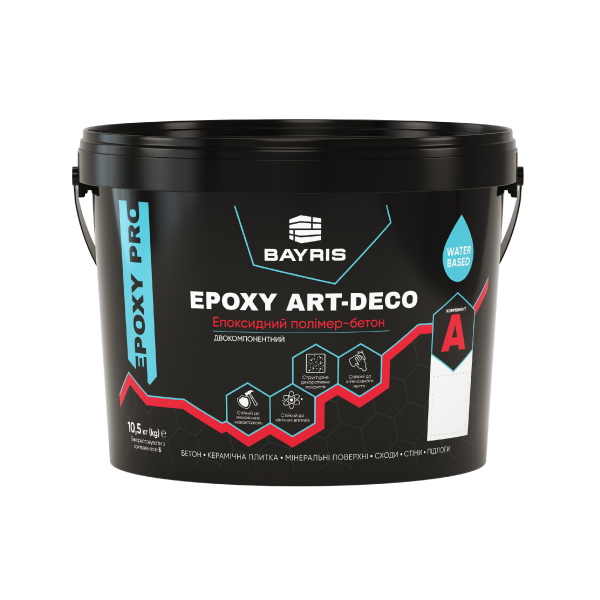
Available Packaging and Coverage
2 kg (100–150) g/m² per coat (approx. 13–20 m² per pack)
8 kg (100–150) g/m² per coat (approx. 53–80 m² per pack)
Description and Purpose
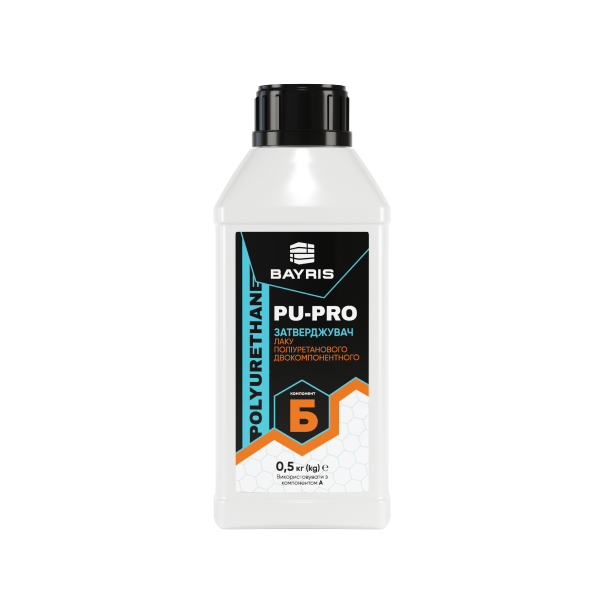
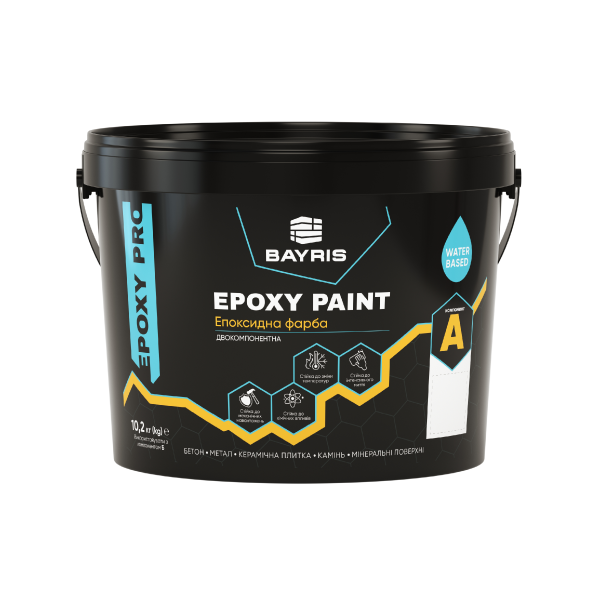
PU-PRO water-based polyurethane protective varnish consists of two components: BASE and HARDENER. Component A (Base) — the base of the water-borne PU-PRO varnish by BAYRIS. Component B (Hardener) — a component that, when added to the base, chemically reacts with it to form a protective film. VOC-free.
Purpose: PU-PRO two-component polyurethane protective varnish is designed for the final protection of surfaces against dirt, stains, and household chemicals for both indoor and outdoor applications (Interior/Exterior). Recommended for protecting decorative plasters, concrete, brick, and other mineral surfaces, as well as microcement floors (including wet rooms and shower areas). Suitable for timber and wood-based surfaces. Also designed for protecting and easily refreshing the surface of polymer coatings from the EPOXY PRO TM BAYRIS series, improving the wear resistance and durability of painted surfaces. Safe for human health and the environment.
Technical Specifications
Upon drying, the varnish forms a transparent, matt, seamless, and elastic protective film with a uniform surface texture. It highlights and preserves the decorative appearance of the substrate. Provides protection against dirt, household cleaning agents, and moderate mechanical loads. Suitable for use on floors in residential and commercial premises with medium traffic intensity. Not recommended for areas exposed to heavy machinery or increased mechanical loads. Non-yellowing, retains the original color, allows regular wet cleaning, and provides high adhesion to the substrate.
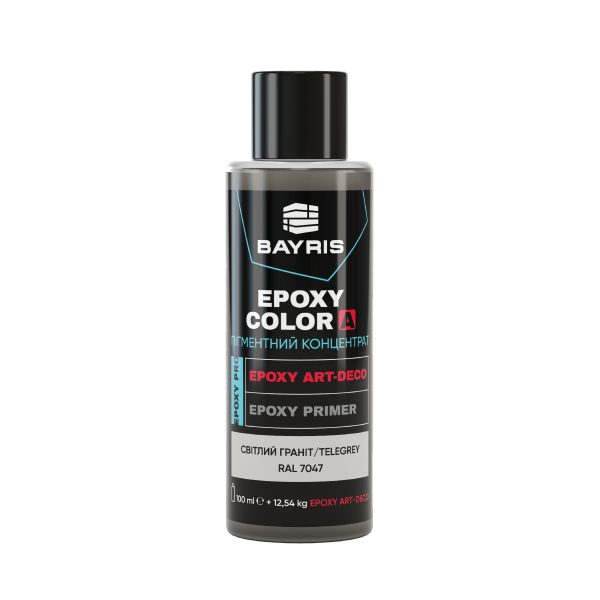
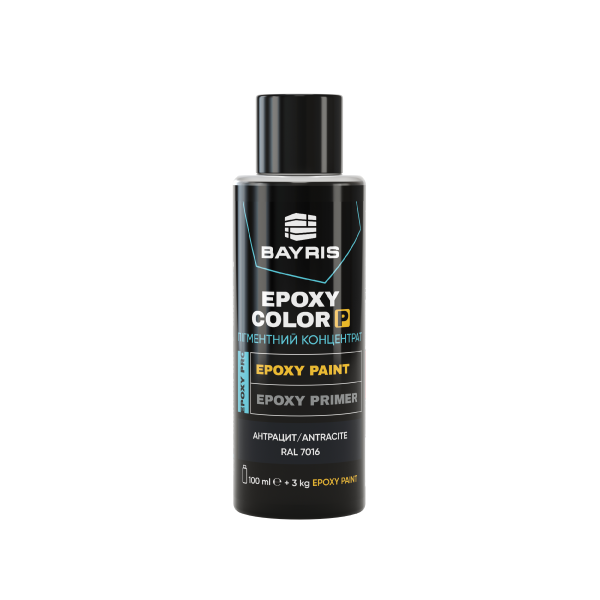
Tinting: The varnish can be tinted manually using ready-to-use EPOXY COLOR A/P TM BAYRIS pigments or via tinting equipment using the EPOXY BAYRIS COLOR SYSTEM.
Application Method
Surface Preparation: If necessary, test the surface with a trial application. The substrate must be dry, sound, clean, and free from defects or flaking that could reduce adhesion. Substrate and ambient temperature must not be below +10 °C. If necessary, lightly sand, dust off, and degrease the surface prior to application.
Mixing: Add Component B (Hardener) to the container with Component A (Base) and thoroughly mix using a power mixer at low speed (250–350 rpm) for 5 minutes. Mixing ratio by weight: Component A : Component B = 100 pbw : 25 pbw (or 80% Component A : 20% Component B).
Caution! Do not use Component A separately as a standalone product. The recommended mixing ratio must be strictly observed to ensure the physical and mechanical properties of the finished coating. The mixed varnish must be used within 90–120 minutes (at 20 °C). Higher temperatures decrease, while lower temperatures increase the pot life of the mixture.
Varnishing: Apply the varnish in thin, uniform coats onto the pre-treated surface using a short-pile roller or spray equipment, avoiding sags or runs. If necessary, apply two coats "wet-on-wet", provided the first coat has lost its tackiness.
Work should be carried out at substrate and ambient temperatures between +8 °C and +25 °C (out of direct sunlight) and relative air humidity not exceeding 80%. Substrate temperature must be at least 3 °C above the dew point. Do not apply during strong winds, rain, or direct sunlight without protective mesh screening. These conditions must be maintained for at least 3 days after application. Failure to comply may lead to reduced coating quality and subsequent degradation.
Recoating intervals at 20 °C should be a minimum of 5 hours and a maximum of 24 hours.
Safety Precautions
The formulation contains active biocidal components (isothiazolinones); therefore, safety rules must be observed during handling. The product may cause skin irritation, allergic reactions, and serious eye damage.
Precautionary Measures:
- Always wear protective eyewear/face shield and gloves during application.
- Store in tightly closed containers out of reach of children.
- Read the instructions on the label carefully before use.
First Aid:
- In case of eye contact: Rinse cautiously with plenty of water for several minutes. Remove contact lenses, if present and easy to do. Continue rinsing.
- In case of skin contact: Thoroughly wash the affected area with soap and water.
Dispose of product residues and empty packaging in accordance with local environmental regulations and laws. Do not discharge into drains or watercourses.